

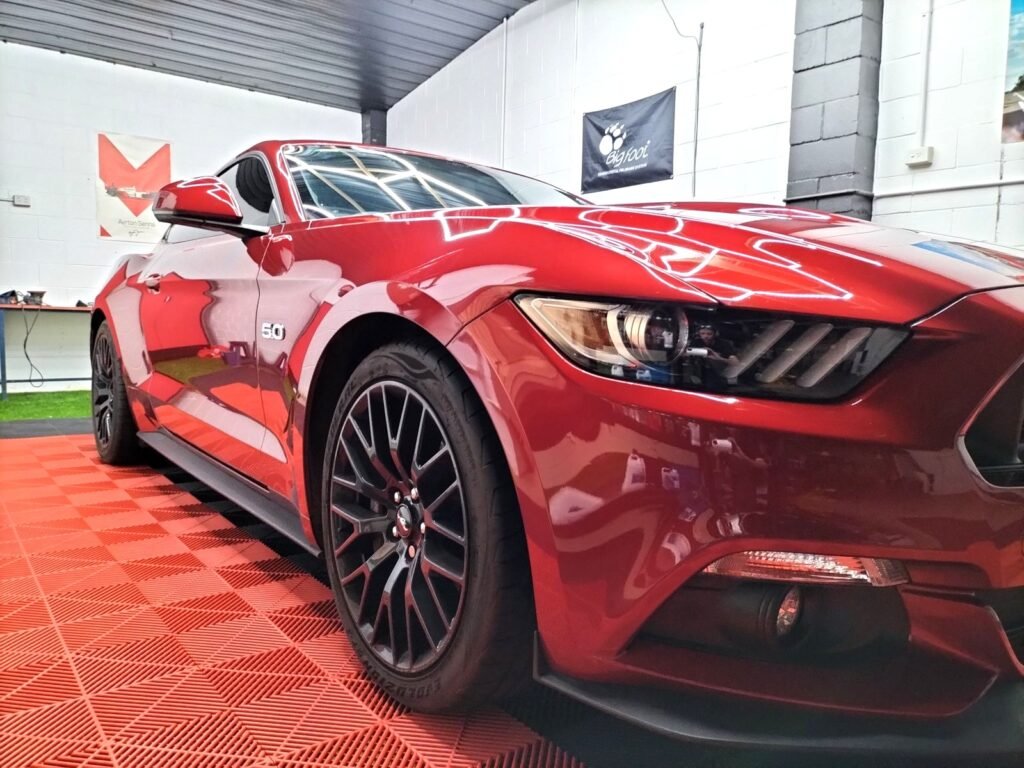
If you have asked a detailer about swirl marks, you have probably heard both words: polishing and paint correction. They sound like the same thing, and plenty of people use them that way. They are related, but they are not the same job, and knowing the difference helps you pay for the right one.
What polishing does
Polishing is about gloss. A machine polisher and a fine polish remove a very small amount of clear coat to take off light haze, faint wash marks and the dullness that builds up over time. The goal is a cleaner, brighter surface. It is a good fit for a car in decent condition that has lost some shine.
Polishing is usually a single stage. It will lift light swirls, but it will not remove deeper scratches or heavy oxidation.
What paint correction does
Paint correction is a process, not a single step. It aims to remove the defects in the clear coat itself: swirl marks, deeper scratches, water spot etching, oxidation and holograms left by earlier polishing. That takes several stages of machine work, starting with a heavier cut and finishing with fine polishing to bring back clarity.
Because the work cuts into the clear coat, it has to be done carefully. The clear coat is thinner than a sheet of paper, and once it is removed it does not grow back. That is why we measure paint thickness with a digital gauge before we start, and again as we work, so every panel stays within safe limits.
The simple way to tell them apart
Polishing makes paint look better. Paint correction makes paint actually better, by removing the damage rather than hiding it. A polish that uses heavy fillers can make swirls disappear for a few washes, then they come back. True correction removes them for good.
Which one does your car need?
- A newer car with light dullness: a polish or a light correction is usually enough.
- Visible swirl marks in the sun: this is classic paint correction territory, often a one or two stage correction.
- Deep scratches, orange peel or heavy oxidation: a multi-stage correction, and sometimes a wet sand on stubborn spots.
- Planning to sell: a light cut and polish as part of a presale detail can lift the whole car without the cost of a full correction.
Brisbane’s sun and storms are hard on paint. UV breaks down clear coat, bird droppings and water spots etch into it, and automatic car washes leave fine scratches behind. Cars here tend to need correction sooner than people expect.
Protect the finish once it is done
Correcting paint and then leaving it unprotected is a waste. Applying a graphene ceramic coating straight after correction locks in the gloss and makes the car easier to wash, so the swirl marks are far less likely to return.
Not sure which one you need?
Send us a few photos of your car in daylight and tell us what bothers you. We will tell you honestly whether a polish will do the job or whether it needs correction, and give you a quote. You can learn more about our paint correction service, see our ceramic coating options, or get an instant quote.